Stone is not one material. It is a category with dozens of variants, each with different properties for freeze-thaw, absorption, weight, cost, and aesthetic. The right stone for a shoreline retaining wall is not the right stone for an interior fireplace surround, and neither is the right stone for a driveway edge. This guide covers the stone types we use most often on Muskoka projects and how we choose between them.
Muskoka granite (native, split-face)
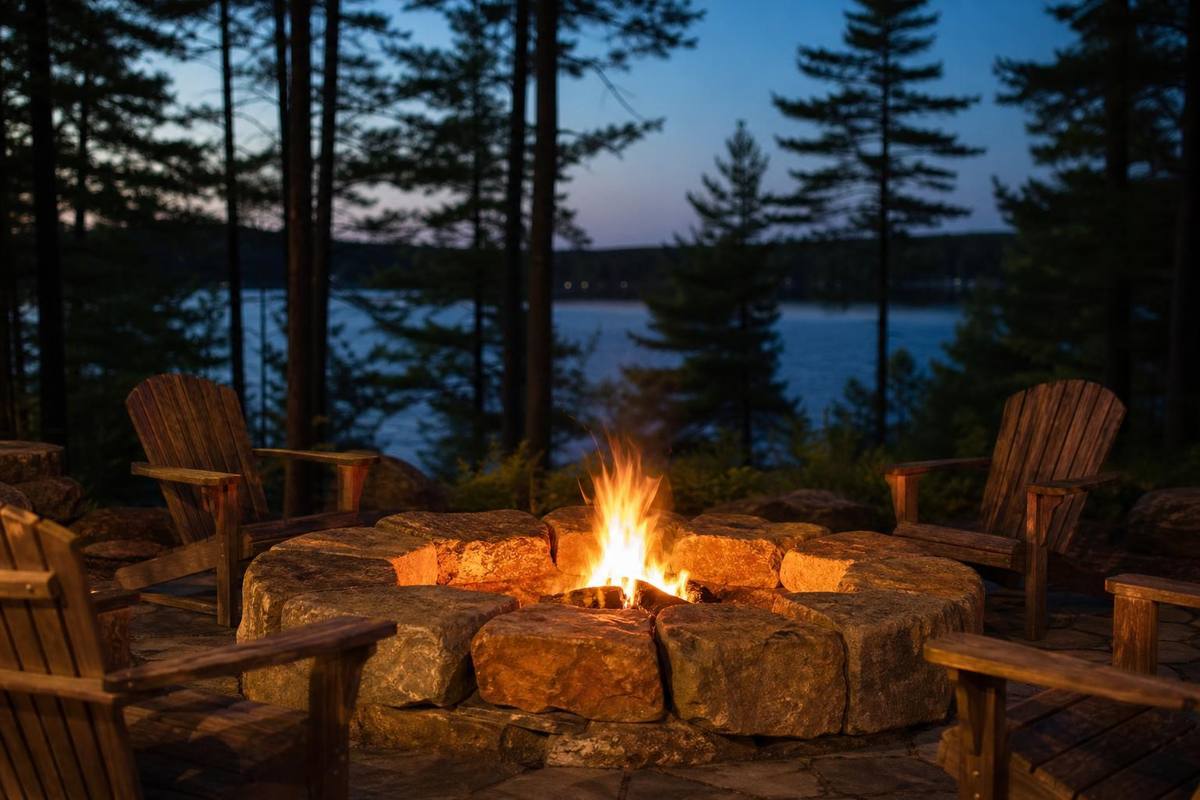
The classic Muskoka look. Locally sourced (or from the wider Canadian Shield), split-face granite reads warm-grey with pink, rust, and cream tones. It ranges from small ledgestone proportions up to full boulders for retaining walls and shoreline armour. Muskoka granite is extremely hard, low absorption, and freeze-thaw tolerant. It is our default for exterior applications where the traditional cottage aesthetic matters.
The tradeoff is cost and workability. Granite is harder to cut and set than softer stones. Custom shapes take more mason time. Expect to pay 15 to 30 percent more for granite work than for comparable limestone.
Limestone (Wiarton, Owen Sound, and imported)
Limestone is easier to work than granite, comes in more consistent sizes, and reads cleaner and more formal. Wiarton and Owen Sound limestones are dolomitic (harder and more freeze-thaw tolerant than typical limestone) and appropriate for exterior use in Muskoka. Softer limestones from farther afield can spall in freeze-thaw and are best used indoors or in sheltered exterior applications.
Limestone works well for cut-stone applications: pillar caps, step treads, hearth stones, wall coping. Its lighter colour is also useful when the design calls for a break from the grey tones of granite or the darker reds of quartzite.
Sandstone
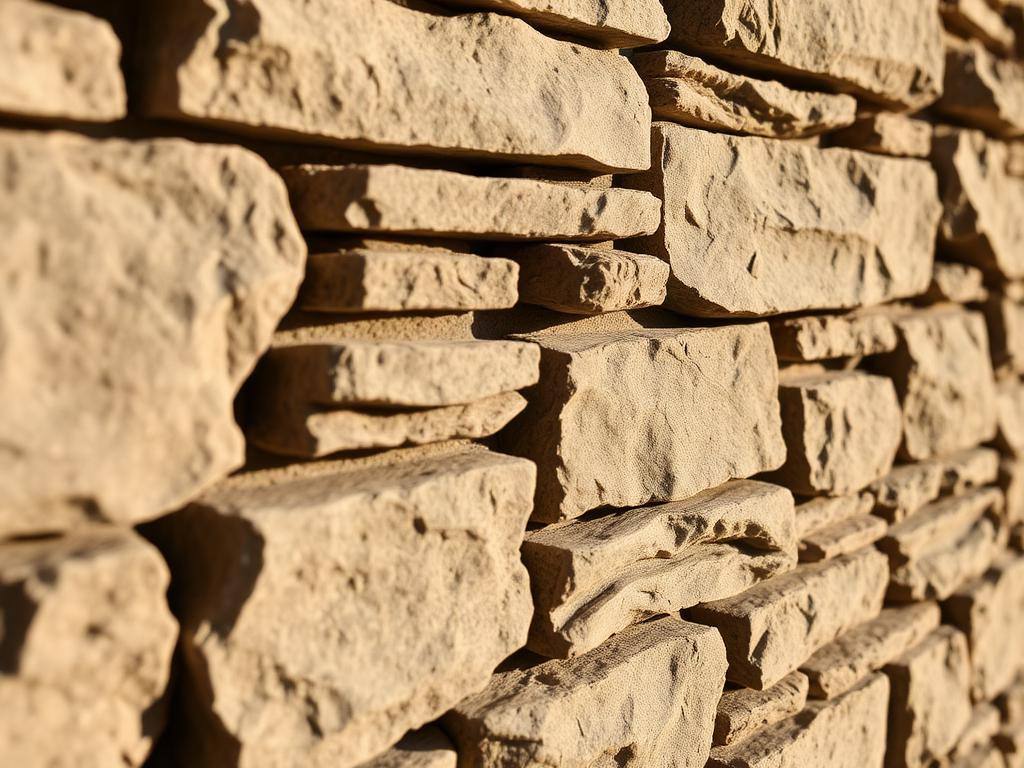
Sandstone reads warm (buff, rust, brown tones) and comes in consistent formats that work well for veneer applications. Freeze-thaw tolerance varies significantly by source: some sandstones are as durable as granite, others delaminate within a few winters. Source-specific due diligence is essential before specifying sandstone for exterior Muskoka work.
Where sandstone shines is in warm-toned aesthetics: cottages with cedar or brown cladding, interior fireplaces where a warm stone reads better than cool granite, and landscape features where the goal is to complement rather than contrast the surrounding wood tones.
Quartzite
Quartzite (natural, not the engineered quartz used for countertops) is one of the hardest natural stones available. Red and grey quartzites from Northern Ontario are common in Muskoka projects. Extremely durable, low absorption, and striking colour depth. Cost is at the high end of natural stone options.
We use quartzite most often for feature applications: a statement fireplace, a signature retaining wall, an accent pillar at a driveway entry. Full-project quartzite is rare because the material cost adds up quickly.
Manufactured stone veneer
Concrete-based products (Cultured Stone, Boral, Eldorado) that simulate natural stone at lower cost and lighter weight. They have improved significantly in the last decade. The best products, well-installed, are hard to distinguish from real stone at normal viewing distances.
Where manufactured veneer works: interior walls, sheltered exterior applications, second-story features where weight matters, budget-conscious projects. Where it does not work: shoreline exposure, high-wear zones, and projects where the owner or their guests will inspect the stone closely.
Full-bed vs adhered veneer
Full-bed stone is 4 inches or thicker, sits on a footing, and is self-supporting or structural. Adhered veneer is 1 to 2 inches thick, bonded to a substrate with mortar and metal lath. Both can be natural stone or manufactured.
- Full-bed natural stone: longest life, best aesthetic, highest cost.
- Adhered natural stone veneer: real stone look at lower cost, but installation quality matters more (bond can fail if substrate is wrong).
- Adhered manufactured veneer: lowest cost, lightest weight, acceptable in the right applications.
“The stone that reads right for a cottage is usually the stone that came out of the ground near it. Local stone in a local building has a coherence that imported stone rarely matches.”
Choosing for the specific application
A quick reference for our typical recommendations:
- Shoreline retaining wall or armour: Muskoka granite (full boulders).
- Exterior chimney or exterior fireplace: Muskoka granite split-face or dolomitic limestone.
- Interior fireplace surround: quartzite for statement, limestone for classic, granite for cottage-traditional.
- Pillar and gate posts: granite with limestone caps.
- Step treads: dolomitic limestone or granite (cut).
- Landscape accents and boulder placement: Muskoka granite (as-quarried, various sizes).
- Interior wall feature (budget-conscious): quality manufactured veneer.
- Driveway edging: granite curb or armour stone.
What we consider on every stone selection
- Freeze-thaw exposure: is the stone going to be wet and cold?
- Weight and structural support: can the substrate carry the stone?
- Absorption rate: matters for freeze-thaw and for staining.
- Local availability: sourcing lead time and shipping cost.
- Aesthetic match with existing site elements.
- Budget: real stone at $180 to $320 per square foot installed, veneer at $65 to $120.
- Long-term maintenance: sealing, re-pointing, cleaning.
FAQ
Frequently asked
- What is the best stone for a Muskoka exterior chimney?
- Muskoka granite (split-face) is the traditional and generally best choice. Dolomitic limestone works well for a cleaner look. Both are freeze-thaw tolerant and appropriate for the exposure.
- How much does natural stone masonry cost per square foot?
- $180 to $320 per square foot installed for natural stone veneer, depending on stone type, complexity, and access. Full-bed stone construction (structural stone walls) is quoted differently, typically by the linear foot with height factored in.
- Is manufactured stone veneer good enough for a cottage?
- For interior applications and sheltered exterior walls, yes. For shoreline exposure or high-visibility features, natural stone is usually worth the cost premium. Quality of the specific manufactured product varies significantly by brand.
- Can I mix different stone types on one project?
- Yes, and it often reads better than a single-stone project. A common pattern is granite for walls and boulders with limestone or quartzite for caps and accent features. Design consideration matters to avoid a busy or incoherent result.
- How long does stone masonry last?
- 60 to 100+ years for natural stone with proper installation and periodic re-pointing. Manufactured veneer is typically warranted for 50 years and can achieve similar life in appropriate applications.
Planning a project like this?
We build these across Muskoka.
See how our team scopes, prices, and delivers this kind of work, from first site visit through closeout.
See the service