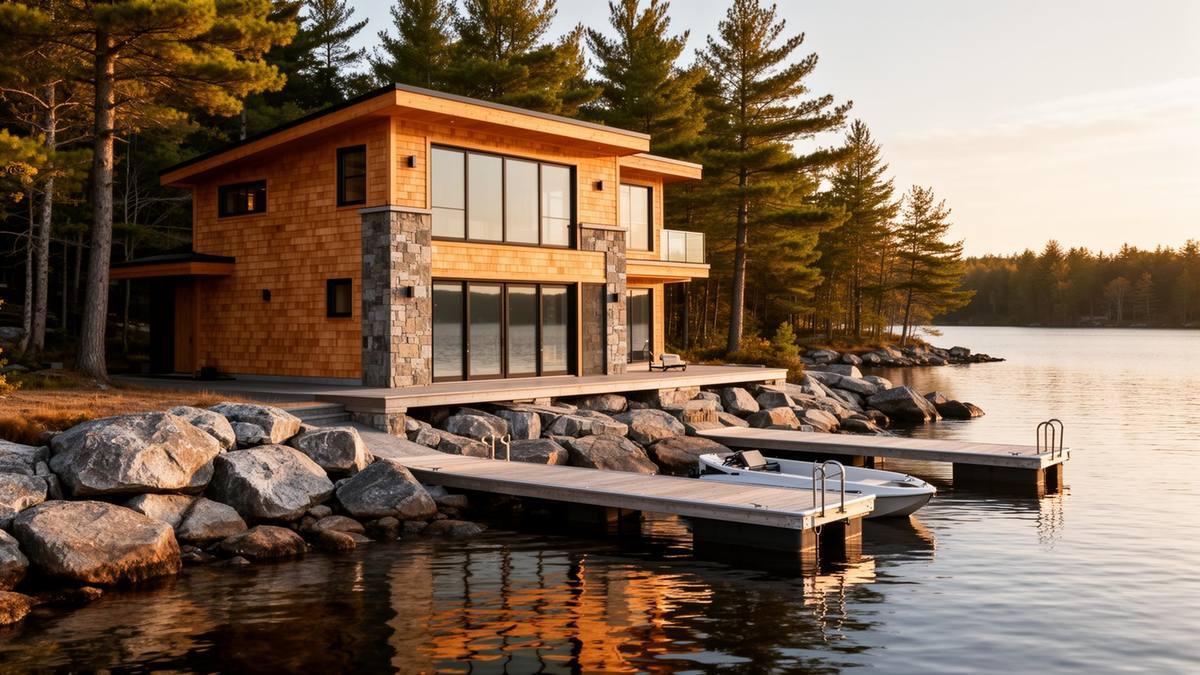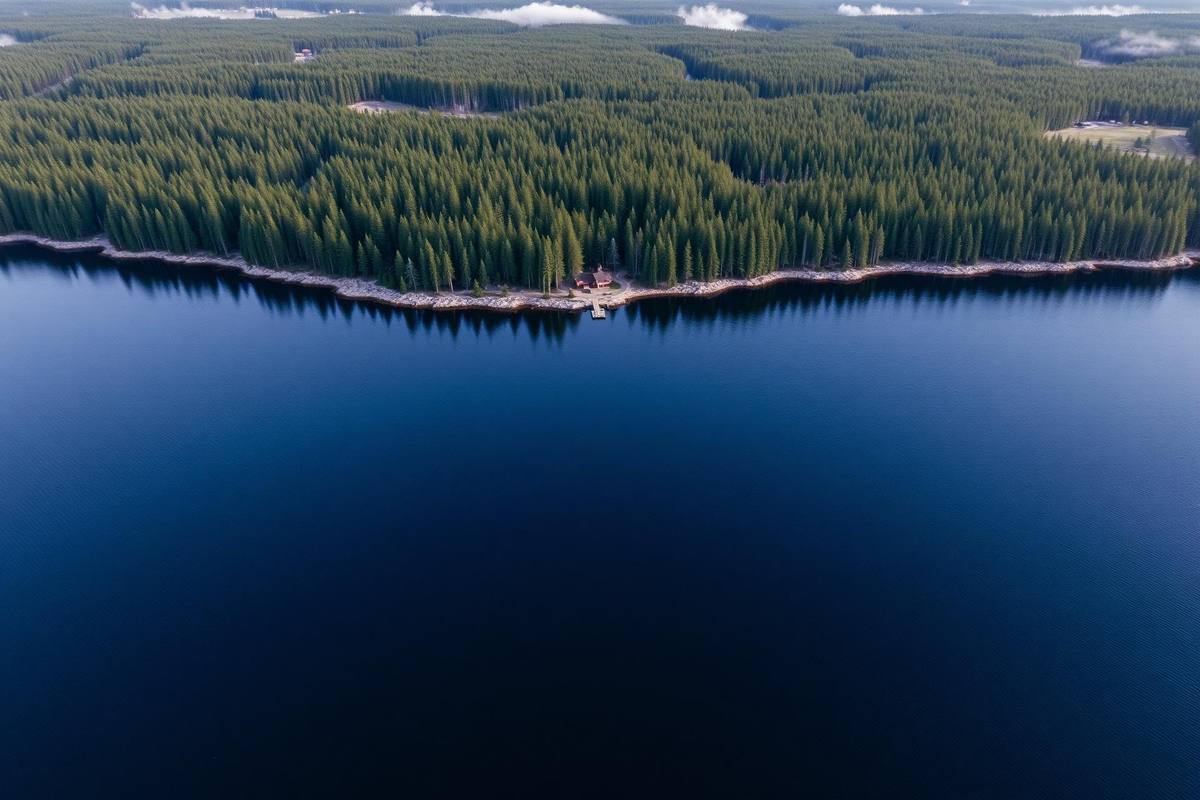
The four lakes around Huntsville, Fairy, Peninsula, Mary, and Vernon, are connected water with an enormous range of shoreline conditions along them. Two properties a kilometre apart can face completely different constraints: one has municipal-road frontage and a modern septic bed, the other has a right-of-way driveway, a 1970s system, and a slope that decides where a foundation can go. This is what actually governs building and renovating on Huntsville waterfront, in the order it will affect your project.
Setbacks decide your design before you draw it
Every waterfront lot has a required setback from the high water mark, set by the municipal zoning by-law. On established Huntsville shoreline, a large share of existing cottages sit closer to the water than current rules would allow. They are legal non-conforming: they may remain, but what you can do to them is limited.
In practice that produces three paths.
- Renovate within the existing footprint. You keep the non-conforming location, so you keep the view and the proximity. Interior work, envelope upgrades, windows, and re-cladding generally proceed without a variance.
- Add away from the water. Build the addition on the landward side, where the setback is satisfied. This is the path most Huntsville waterfront additions take, and good design makes it feel intentional rather than compromised.
- Apply for a minor variance. When the only sensible expansion is toward the lake, the Committee of Adjustment hears it. Add two to four months and a real chance of refusal. Never demolish anything based on an assumed approval.
Septic is the real constraint on bedroom count
On Huntsville waterfront, septic capacity, not lot size, usually determines how much cottage you can have. Septic systems are sized to the number of bedrooms, and adding bedrooms triggers a review.
Older systems on these lakes were installed for seasonal occupancy by four people. Convert to four-season use, add a bedroom and a second bathroom, and the system is out of spec. A Class 4 septic replacement on a waterfront lot runs $30,000 to $70,000, and the higher end applies when the bed has to go uphill from the cottage and a pump chamber is needed, or when a raised bed is required because of shallow soil over rock.
Shallow soil over Shield rock is common here. That is what drives raised beds, and a raised bed needs imported fill, space, and access for trucks. On a tight lot with a right-of-way driveway, that is the hardest part of the whole project.
Get the septic answer before the design
We arrange the evaluation early, because it is the item most likely to change the plan. Discovering it after drawings are done means paying for drawings twice.
Access, and why it changes the price
Huntsville waterfront access falls into four categories, and the cost difference between them is significant.
- Municipal year-round road. Easiest. Full delivery access, winter work possible, no seasonal restriction.
- Private road association. Common on these lakes. Confirm winter maintenance and any weight restriction before scheduling concrete or lumber deliveries. Some associations restrict heavy traffic during spring thaw, which can push a foundation pour by six weeks.
- Right-of-way driveway. Access exists but may be narrow or steep. Materials get shuttled from a staging point, which is real labour cost and should appear as a visible line in your estimate.
- Water access. Everything arrives by barge. Add fifteen to thirty percent to the project, plan deliveries in large consolidated loads, and accept that a forgotten box of screws is a half-day event.
The build season, honestly
The reliable Huntsville construction window is May through October. That is when excavation, foundations, framing, exterior work, and site work all proceed without weather penalties.
Winter work is possible, and we do it, but with conditions. Concrete needs heating and blankets, which costs money. Excavation in frozen ground is slow and expensive. Exterior finishing in January is not productive. What does work well in winter is interior renovation in a heated building: kitchens, bathrooms, basements, and millwork are excellent winter projects, and the trades are more available.
“The right way to use a Muskoka winter is to build indoors and to get every permit approved so the machines can move the week the frost leaves.”
Timeline for a Huntsville waterfront project
For a substantial renovation or addition on the lake, plan on:
- Weeks 1 to 3: Site visit, measure, septic evaluation, zoning confirmation.
- Weeks 3 to 10: Design and drawings, structural engineering where required.
- Weeks 8 to 18: Permit application and review. Add two to four months if a variance is needed.
- Weeks 14 to 20: Contract, materials procurement, long-lead items ordered.
- May onward: Construction.
Which is why the honest answer to “can we do it this summer?” asked in April is usually no, and asked in October is comfortably yes. Winter is when the paperwork gets done.
What waterfront work costs here
- Four-season conversion of a seasonal cottage: $250,000 to $600,000, depending on the existing envelope, the foundation, and the mechanical system.
- Addition on a waterfront lot: $550 to $900 per square foot, with foundation type and access driving the range more than finishes.
- Full interior renovation, existing footprint: $200 to $400 per square foot.
- Septic replacement: $30,000 to $70,000.
- Shoreline structures such as docks and boathouses: separate permitting, and worth their own conversation.
These are real ranges from work on this lake chain, not national averages. They are ranges rather than quotes, and the only way to narrow yours is a site visit.
Start with the constraints, not the wish list
The projects that go well on Huntsville waterfront are the ones where setback, septic, and access were answered before anyone drew a floor plan. The projects that go badly are the ones where a beautiful design met the Committee of Adjustment for the first time in month five.
We are based in Huntsville, so establishing those three answers for your property is a short drive and a free site visit. Bring your survey if you have one. It saves everybody a week.
FAQ
Frequently asked
- What is the shoreline setback for building on Huntsville lakes?
- The required setback from the high water mark is set by the municipal zoning by-law and varies by zone and lot. Many existing cottages on Fairy, Peninsula, Mary, and Vernon Lake sit closer than current rules allow and are legal non-conforming, which limits what can be expanded without a minor variance.
- Can I demolish and rebuild my cottage in the same spot?
- Not necessarily. If the existing structure sits inside the current setback as a legal non-conforming building, demolishing it can permanently forfeit the right to rebuild in that location. Confirm with the municipality before any demolition.
- How much does a septic system cost on Huntsville waterfront?
- A Class 4 replacement typically runs $30,000 to $70,000. The higher end applies when a pump chamber is needed to reach an uphill bed, or when shallow soil over Shield rock requires a raised bed with imported fill.
- When is the building season in Huntsville?
- May through October is the reliable window for excavation, foundations, framing, and exterior work. Interior renovations in a heated building run well all winter, and winter is the best time to get permits approved so construction can start the week the frost leaves.
- How much does a waterfront addition cost in Huntsville?
- Typically $550 to $900 per square foot. Foundation type and site access drive the range more than finish selection does, and water-access properties add fifteen to thirty percent for barging.
- How long does a waterfront permit take?
- Plan on six to ten weeks for a straightforward building permit once the application is complete. If a minor variance is required, add two to four months for the Committee of Adjustment process, and treat the outcome as uncertain until it is granted.
Planning a project like this?
We build these across Muskoka.
See how our team scopes, prices, and delivers this kind of work, from first site visit through closeout.
See the service In huntsville