Every dock conversation in Muskoka eventually comes down to the same four options: crib, pipe (also called post or steel pile), floating, and cantilever. Each has a different cost profile, a different relationship with ice, and a different permit path. We build and repair all four types across Lake Muskoka, Lake Rosseau, Lake Joseph, and Lake of Bays, and the right answer depends on the specific shoreline more than on personal preference. This guide breaks down what each type actually costs installed, how it holds up over a Muskoka winter, and what the permitting realities look like in 2026.
Why dock type is a site decision, not a style decision
Homeowners often start the dock conversation with an image from a magazine or a neighbour's shoreline. That is a fine starting point, but the water depth, bottom composition, ice behaviour, and exposure of your specific shoreline narrow the real options quickly. A cantilever dock that works beautifully on a shallow, protected bay may be structurally wrong for an exposed point with three feet of ice movement every spring. We start every dock quote with a site walk and, where the water is deep or the bottom is unclear, a probe to confirm what is actually down there before we recommend a type.
Crib docks
Crib docks are the traditional Muskoka dock: timber or steel frames filled with rock, sunk to the lake bed, and decked on top. They are heavy, permanent, and handle wave action and ice better than any other type when built correctly. They also require in-water construction, which means permits and a restricted work season.
- Typical installed cost: $650 to $1,100 per linear foot of dock frontage, depending on water depth and crib count.
- A modest two-crib dock (roughly 24 to 30 feet) commonly lands between $28,000 and $55,000 all-in.
- Larger multi-crib docks with a boat slip or a covered section run $70,000 to $150,000+.
Cribs are the most ice-tolerant dock type available because their mass resists the lateral push of ice sheets during spring breakup. Properly built cribs with adequate rock fill and correctly sized timbers can last 40 to 60 years, with decking and stringers needing periodic replacement well before the crib structure itself needs attention.
Pipe (steel pile) docks
Pipe docks use driven steel posts to support a wood or aluminum deck frame above the water. They are faster to install than cribs, cost less, and cause less lake-bed disturbance, which regulators generally prefer.
- Typical installed cost: $250 to $450 per linear foot.
- A straightforward 24 to 30 foot pipe dock: $9,000 to $16,000.
- Add-ons like a boat lift platform or an L-section add $4,000 to $12,000.
The tradeoff is ice tolerance. In lakes with significant spring ice movement, pipe docks can be pushed, bent, or pulled out of position if not driven deep enough or braced properly. Most Muskoka pipe docks are designed to be at least partially removable each fall, which adds an annual labour cost but largely eliminates ice risk. Permanent pipe installations are possible on more protected bays with lighter ice action, but we spec them conservatively and discuss ice history for the specific lake before recommending a permanent pipe dock.
Floating docks
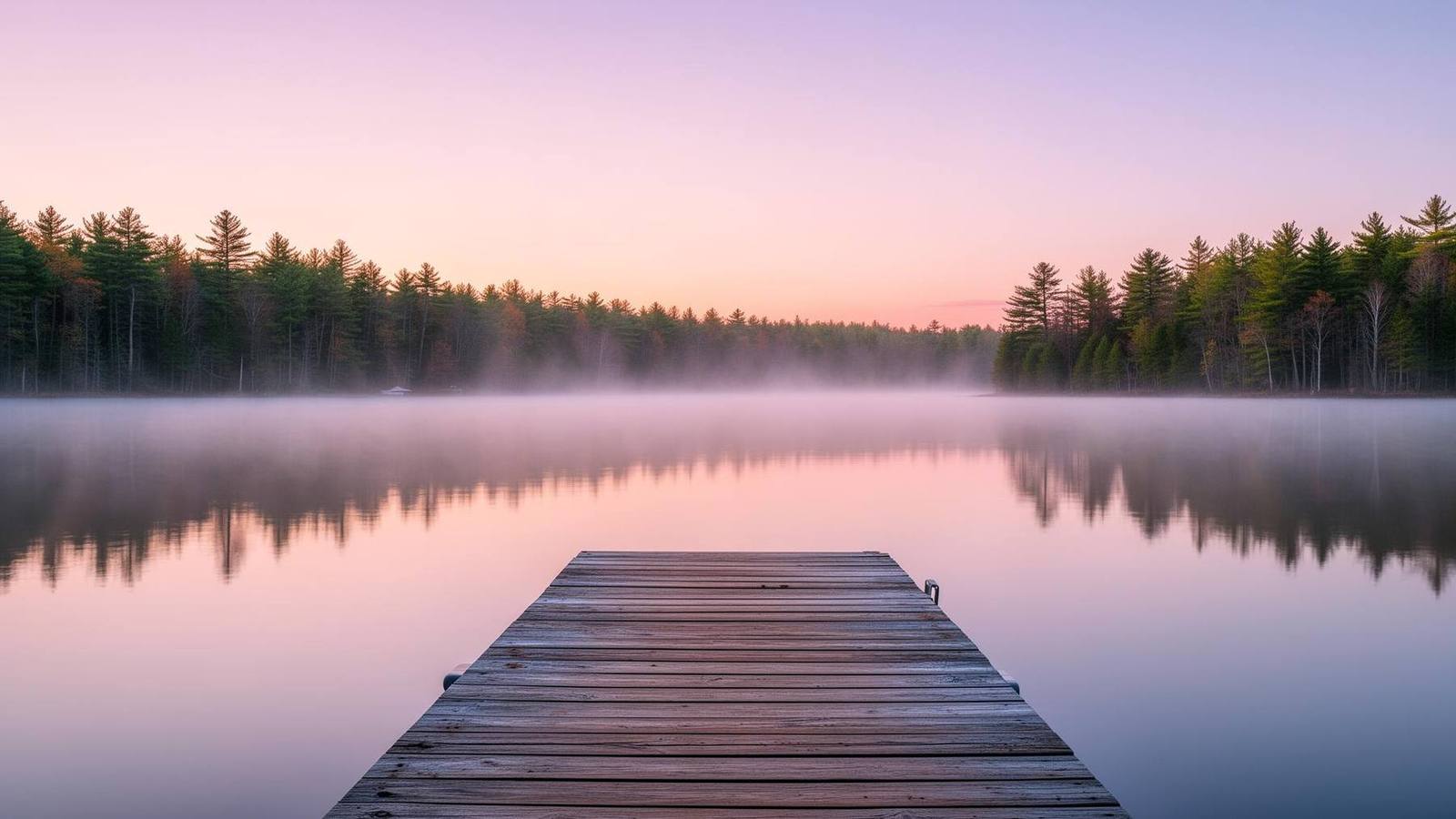
Floating docks sit on foam-filled or barrel pontoons and rise and fall with water level. They are the easiest type to install without heavy equipment, adapt automatically to fluctuating water levels, and are generally the least disruptive to install from a permitting perspective since there is minimal lake-bed contact.
- Typical cost: $180 to $350 per linear foot for a quality modular floating system.
- A 24 to 30 foot floating dock with anchoring: $6,000 to $12,000.
Floating docks must be pulled out of the water every fall in Muskoka. Leaving one in over winter is a near-guarantee of ice damage. This annual haul-out and re-launch adds $600 to $1,800 per season depending on size and access, which should be factored into the true lifetime cost against a permanent crib or pipe dock.
Cantilever docks
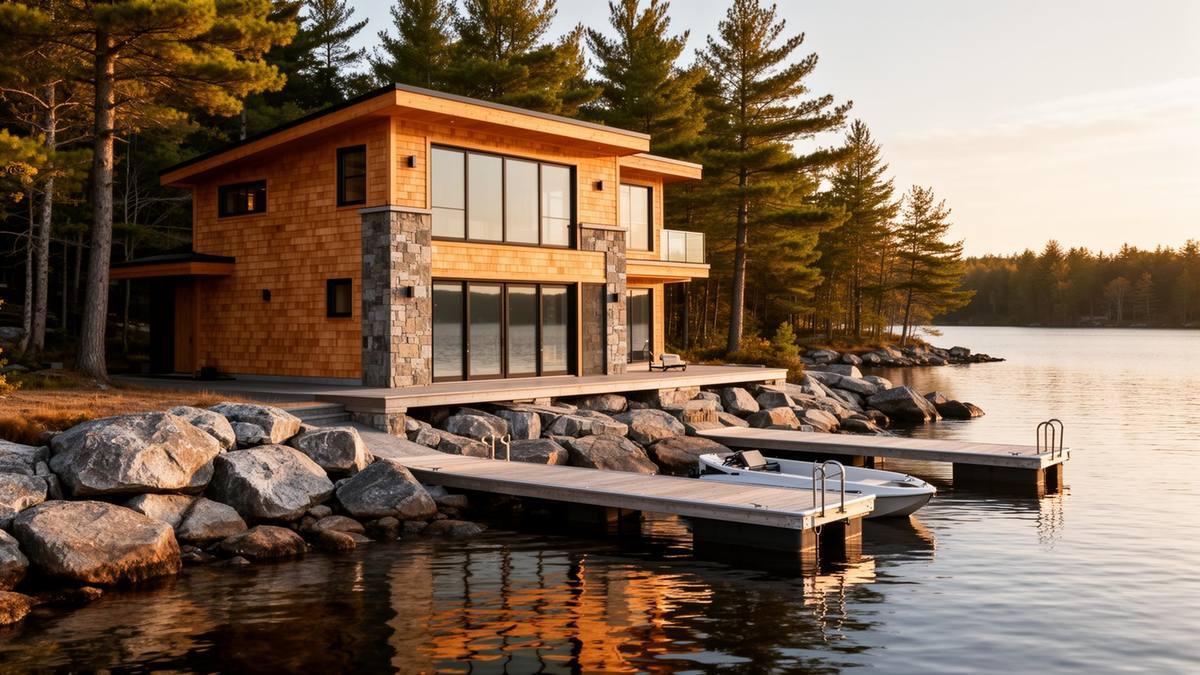
Cantilever docks use a steel frame anchored on shore or in shallow water that extends out over the water without any support posts under the far end. They are common on shallow, rocky shorelines where driving posts is difficult and where the owner wants a dock that rises above fluctuating water without the visual bulk of a crib.
- Typical cost: $350 to $600 per linear foot.
- A residential cantilever dock (16 to 24 feet): $8,000 to $18,000.
Cantilevers work best on shallow water with a hard, rocky bottom close to shore, which describes a fair number of Muskoka Lakes and Lake of Bays shorelines. They handle fluctuating water levels well because the whole structure pivots, but they are not the right choice for deep water or for docks that need to support a permanent boathouse or heavy structure at the far end.
Cost comparison at a glance
These figures are for straightforward, well-supported shorelines with reasonable barge or land access. Water-access only sites, deep water, or difficult bottom conditions can push any of these numbers up by 20 to 40 percent because of the added logistics.
Ice behaviour by dock type
Ice is the single biggest factor separating a dock that lasts decades from one that needs constant repair. Muskoka lakes freeze several inches to a foot or more thick most winters, and that ice sheet expands, contracts, and shifts with temperature swings all winter before finally breaking up in spring. A dock that is not designed for this movement will eventually show it.
- Crib docks: highest ice tolerance due to mass and bottom anchoring. Occasional deck board or stringer damage from ice heave, rarely structural crib failure.
- Pipe docks: moderate to low tolerance unless posts are driven well below frost depth and braced. Seasonal removal largely eliminates the risk.
- Floating docks: no ice tolerance. Must be removed every fall without exception.
- Cantilever docks: moderate tolerance if properly anchored on shore; the shallow water they typically sit in has less ice mass than deep-water sections.
Permits: what to expect
Any new dock or any dock replacement in Muskoka typically requires municipal review at minimum, and often provincial (MNRF) review if crib or pile components touch the lake bed. Repairs to an existing legal dock generally have a lighter review path than new construction or footprint expansion. We cover this in more depth in our shoreline permits guide, but the short version for dock projects specifically:
- Simple deck-board replacement on an existing dock: usually no permit needed.
- Repair of existing crib or pile structure without expansion: municipal review, often light.
- New dock or expanded footprint: municipal permit plus MNRF review, sometimes DFO depending on scope.
- Floating dock installation: often the lightest permit path since there is minimal permanent lake-bed disturbance, but confirm with your municipality since floating docks still count toward shoreline structure limits in some bylaws.
In-water construction work, which applies to crib and most pipe dock installations, is restricted to a seasonal window set by MNRF, typically August through late October on most Muskoka lakes. Floating and cantilever docks that do not disturb the lake bed are not bound by this window in the same way, which is one more reason they are popular for owners who need work done outside the late-summer window.
“The dock that lasts is the one built for the ice your specific shoreline actually sees, not the one that looked best in a brochure.”
Boat lifts and slips: how they factor into type choice
If a boat lift or a covered slip is part of the plan, that usually pushes the decision toward a crib or a well-braced pipe dock, since both types can carry the additional load and anchor points a lift requires. Floating docks can support floating boat lifts but not fixed hydraulic lifts. Cantilever docks generally are not deep enough at the outer end for a lift unless the shoreline drops off quickly.
Maintenance costs over a dock's life
Every dock type needs periodic maintenance regardless of how well it is built. Rough annual and periodic budgets we see across our client base:
- Crib dock: deck board replacement every 12 to 20 years ($3,000 to $8,000), stringer and structural inspection every 10 years.
- Pipe dock: annual removal and re-installation if seasonal ($800 to $1,800/year), post inspection every 5 years.
- Floating dock: annual haul-out and launch ($600 to $1,800/year), pontoon replacement every 15 to 25 years.
- Cantilever dock: low annual maintenance, periodic hardware and welded-joint inspection every 5 to 8 years.
How we approach a dock project
We start with a site walk to assess bottom composition, water depth at the outer end, exposure to wind and ice, and how the dock will actually be used (swimming, boat storage, lounging, a boat lift). From there we recommend one or two dock types that fit the site, price them out with realistic numbers rather than best-case numbers, and handle the municipal and MNRF permitting as part of the project rather than leaving it to the homeowner to navigate separately.
A realistic budget range by scenario
For owners trying to put a number on their specific project, these ranges reflect what we actually see quoted and built in Muskoka in 2026, not catalogue pricing:
- Small protected-bay floating dock, 20 feet: $5,000 to $9,000.
- Mid-size pipe dock with L-section, 30 feet: $12,000 to $22,000.
- Standard two-crib dock with decking, 28 feet: $32,000 to $55,000.
- Large crib dock with covered slip and boat lift platform: $85,000 to $160,000.
- Cantilever dock on shallow rocky shoreline, 20 feet: $9,000 to $16,000.
These ranges assume reasonable land or barge access. Add 15 to 30 percent for water-access only sites where every piece of material and every worker arrives by boat or barge.
FAQ
Frequently asked
- Which dock type lasts longest in Muskoka?
- A properly built crib dock, typically 40 to 60 years for the structure itself, with decking replaced periodically. Pipe and cantilever docks last 25 to 40 years with proper maintenance. Floating docks depend heavily on consistent seasonal haul-out.
- Do I need a permit to replace my dock?
- Usually yes for any new construction or footprint change. Municipal review at minimum, MNRF review if crib or pile components touch the lake bed. Simple repairs to an existing legal dock often have a lighter path. Check with your township before starting.
- Can I leave a floating dock in over winter?
- No. Ice will almost certainly damage the pontoons and frame. Floating docks need to be hauled out every fall in Muskoka without exception.
- What is the cheapest dock option?
- Floating docks are generally the lowest upfront cost, but factor in $600 to $1,800 a year for haul-out and launch. Over a decade or more that annual cost can close the gap with a permanent pipe dock.
- Is a cantilever dock a good fit for deep water?
- No. Cantilever docks work best on shallow water with a hard, rocky bottom close to shore. In deep water a crib or well-braced pipe dock is a better fit structurally.
- When is the in-water work season for dock construction?
- Typically August through late October on most Muskoka lakes, set by MNRF to protect fish spawning. Floating and cantilever docks that do not disturb the lake bed generally have more flexibility outside that window.
Planning a project like this?
We build these across Muskoka.
See how our team scopes, prices, and delivers this kind of work, from first site visit through closeout.
See the service In muskoka lakes