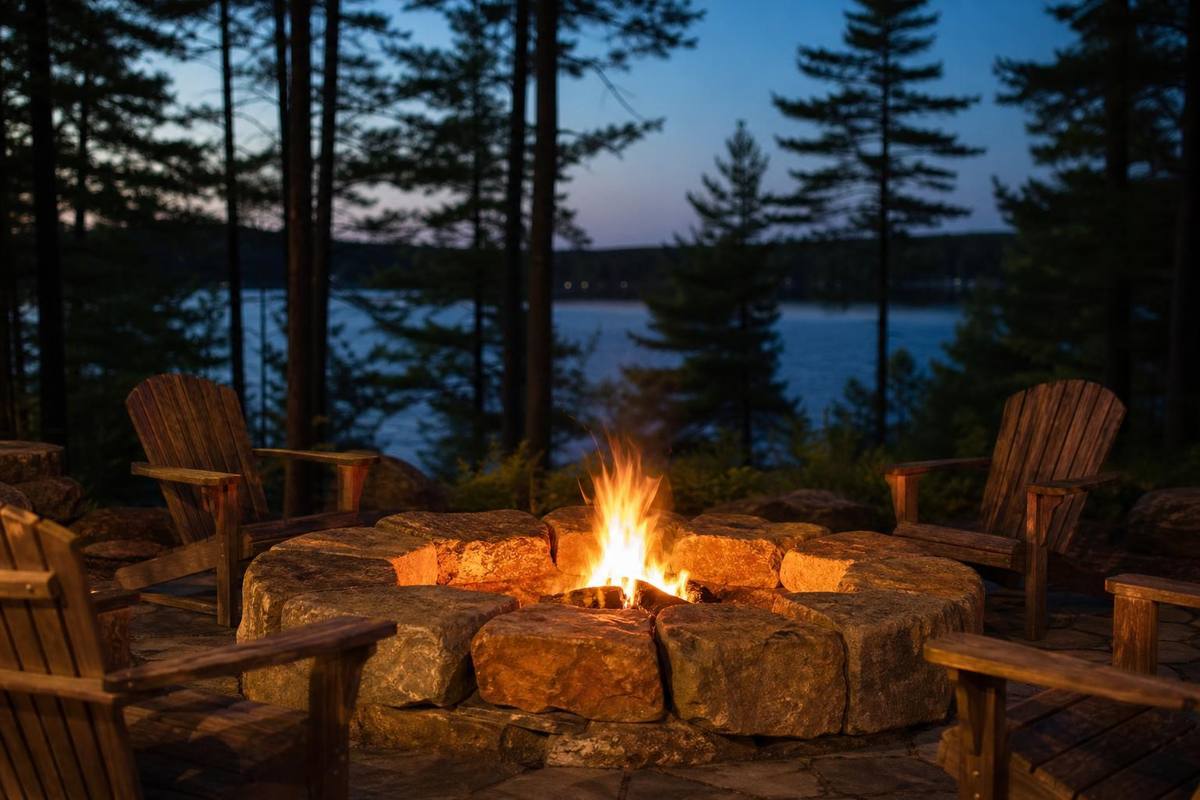
A stone fireplace is the single feature most people picture when they imagine a Muskoka cottage great room. Getting one built well involves more decisions than most owners expect: full masonry versus veneer, wood-burning versus gas, chimney design and code compliance, and the WETT inspection that insurance companies will require before covering a wood- burning appliance. This guide walks through those decisions with realistic Muskoka cost bands for 2026.
Full masonry versus stone veneer: the core decision
The first fork in the road is whether the fireplace will be full masonry (structural, load-bearing stone or brick with its own footing) or a veneer application (a thinner stone or brick layer applied over a framed structure, often around a factory-built metal or masonry firebox).
Full masonry fireplaces
A true masonry fireplace, built from the footing up with a masonry firebox, smoke chamber, and chimney, is the traditional approach and generally the most durable and highest-performing option for radiant heat and longevity. It requires a footing engineered for the weight, which on many Muskoka sites means coordinating with the foundation design from the start of a new build rather than adding it after the fact.
- Typical installed cost for a full masonry fieldstone fireplace with chimney: $28,000 to $55,000, depending on height, stone type, and complexity.
- Larger great-room features with a raised hearth, wood storage niche, or a two-storey chimney can run $60,000 to $100,000+.
Stone veneer fireplaces
Veneer applications use a factory-built firebox (wood-burning or gas) framed into the wall, with natural stone or manufactured veneer applied over the surrounding structure and up the chase for the chimney chase cover. These cost significantly less, weigh less (important for second-storey or over-basement installations), and with quality stone and good installation are visually very close to full masonry.
- Typical installed cost for a natural stone veneer fireplace with factory-built firebox: $12,000 to $24,000.
- Manufactured stone veneer versions: $8,000 to $16,000.
Wood-burning versus gas
Wood-burning fireplaces deliver the ambiance and real heat output most cottage owners want, but require a proper chimney, seasoned wood supply, and annual maintenance including chimney sweeping. Gas fireplaces or inserts offer push-button convenience, more consistent heat, and simpler venting, but many owners feel they lack the character of a true wood fire in a cottage setting.
- Wood-burning masonry fireplace: highest ambiance and heat output, requires the most maintenance and chimney upkeep.
- Wood-burning insert in a masonry or veneer surround: better efficiency than an open masonry fireplace, still requires chimney maintenance.
- Gas fireplace or insert: lowest maintenance, most convenient, still visually anchored by a stone surround and chase.
A number of our clients choose a hybrid approach: a full stone fireplace built to accommodate a wood-burning insert now, with the option to convert to gas later if maintenance becomes a concern, particularly for cottages that see limited winter occupancy.
Chimney design and code basics
Chimney height, clearance to combustibles, and flue sizing are all governed by the Ontario Building Code and, for wood- burning appliances specifically, by CSA B365 installation standards. A few of the rules that most often affect design:
- Chimney height must clear the roofline by a minimum distance, typically 3 feet above the roof penetration and 2 feet above anything within 10 feet horizontally, to ensure proper draft and reduce fire risk from sparks.
- Clearance to combustible materials (framing, insulation, siding) around the chimney chase must meet the appliance or masonry manufacturer's specified minimums.
- Flue sizing must match the firebox opening to ensure proper draft; an undersized or oversized flue causes smoking and poor performance regardless of how well the masonry is built.
- A proper hearth extension in front of the firebox is required to protect flooring from embers, sized according to code based on the firebox opening.
WETT inspections: what they are and why they matter
WETT (Wood Energy Technology Transfer) inspections are a standardized assessment of wood-burning systems performed by certified inspectors. Most Canadian home insurance providers require a current WETT inspection before insuring a property with a wood-burning fireplace, stove, or insert, and often require a new inspection whenever ownership changes or after significant work on the system.
- A WETT inspection checks clearances, installation quality, chimney condition, and compliance with the applicable code and manufacturer specifications.
- For new construction, we build to the standard a WETT inspection will check, and coordinate the inspection as part of project closeout so the paperwork is ready when the insurance renewal or new policy application comes up.
- For existing fireplaces being purchased or insured for the first time, a WETT inspection typically costs $200 to $450 and can be arranged independently of any construction work.
- If a WETT inspection identifies deficiencies, the cost to remediate ranges widely depending on the issue, from a simple clearance fix in the low hundreds of dollars to a full chimney relining or rebuild in the tens of thousands.
Cost bands summary
Add 10 to 20 percent to any of these ranges for water-access or barge-dependent sites, given the weight of stone and masonry materials and the equipment needed to move and set them.
Stone selection for fireplaces
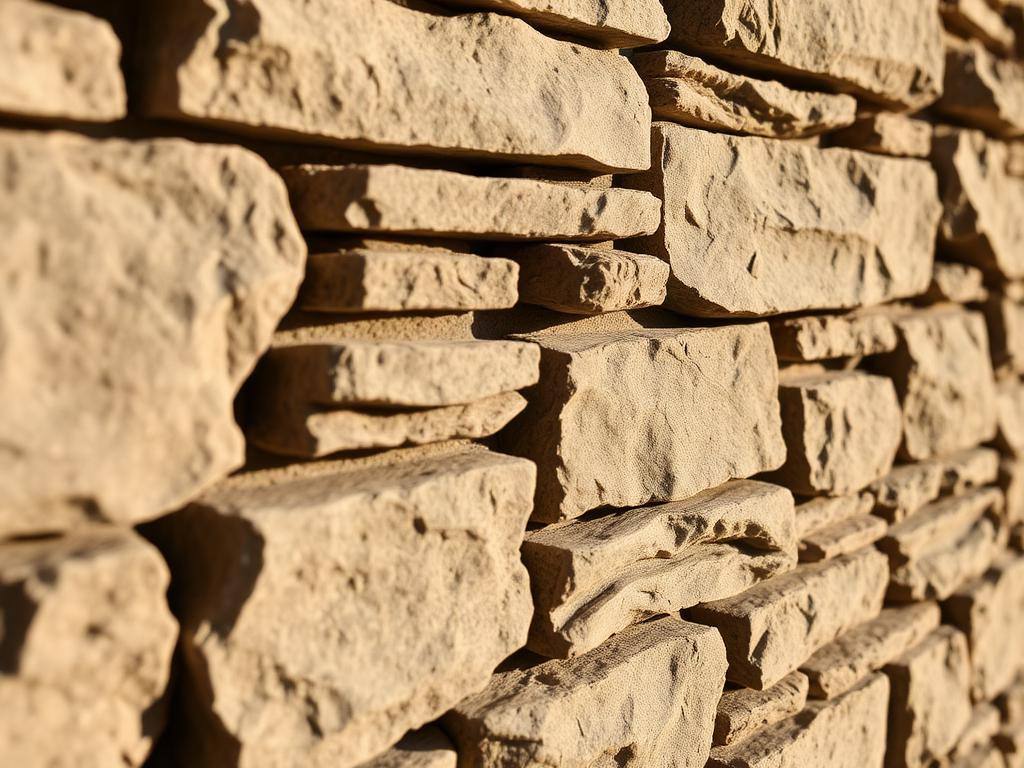
Muskoka granite, dolomitic limestone, sandstone, and quartzite are all used for fireplace surrounds, each with a different look and cost. Muskoka granite reads as the traditional cottage choice, quartzite makes a striking statement feature, limestone gives a cleaner and more formal look, and sandstone reads warm and pairs well with cedar interiors. Our stone types comparison guide covers the properties of each in more detail if you are weighing options for a specific interior.
Sequencing a fireplace into a build or renovation
For new builds, the fireplace footing and chimney chase need to be part of the structural design from the foundation stage, since retrofitting a full masonry footing after the fact is far more disruptive and expensive than including it from the start. For renovations adding a fireplace to an existing structure, veneer around a factory-built firebox is almost always the practical path unless there is an existing masonry chimney or footing to build from.
“The best-looking fireplace on a Muskoka renovation budget is usually a quality stone veneer done well, not a full masonry fireplace done on a compromised budget.”
Maintenance once it is built
- Annual chimney sweeping for any wood-burning system, regardless of how often it is used.
- Periodic mortar joint inspection on masonry chimneys, since freeze-thaw cycling can degrade joints over years.
- Chimney cap inspection and replacement as needed to keep moisture and animals out of an unused flue.
- Re-certification WETT inspection whenever insurance requires it, typically at ownership change or policy renewal in some cases.
FAQ
Frequently asked
- Is stone veneer as durable as full masonry for a fireplace?
- Quality natural stone veneer, properly installed over a correctly framed structure, is very durable for interior applications. It does not match the structural permanence of full masonry, but for most cottage interiors it performs well for decades.
- What is a WETT inspection and do I need one?
- A WETT inspection is a standardized check of a wood-burning system's installation and condition. Most home insurance providers require a current one to insure a property with a wood-burning fireplace, stove, or insert.
- Why does my fireplace smoke even though it was built recently?
- Most smoking issues trace back to flue sizing or chimney height relative to the roofline and nearby structures or trees, not to masonry workmanship. These need to be calculated correctly at the design stage.
- Can I add a full masonry fireplace to an existing cottage?
- Yes, but it requires a new footing engineered for the weight, which is a more disruptive renovation than adding a veneer fireplace around a factory-built firebox. We assess the existing structure to confirm what is feasible.
- How much does a stone fireplace cost in Muskoka?
- Full masonry fieldstone fireplaces with chimney typically run $28,000 to $55,000. Natural stone veneer with a factory-built firebox runs $12,000 to $24,000. Manufactured veneer versions run $8,000 to $16,000.
- Do I need to reline my chimney if I switch from wood to gas?
- Often yes. Gas appliances typically require a different flue liner size and material than wood-burning systems. A qualified installer or WETT inspector can confirm what your specific chimney needs for the appliance change.
Planning a project like this?
We build these across Muskoka.
See how our team scopes, prices, and delivers this kind of work, from first site visit through closeout.
See the service In muskoka lakes